Insulin and muscle growth are connected, but insulin does not directly switch on muscle gain. It mainly supports nutrient storage and limits muscle protein breakdown. Normal insulin action aids recovery, but a larger insulin spike does not automatically build more muscle.
Insulin helps move glucose out of the bloodstream and restore muscle glycogen after training. However, resistance training, adequate protein, sufficient energy, and recovery drive muscle growth. You do not need sugar, special nutrient timing, or supplements to maximize insulin.
What insulin does in the body
Insulin is a peptide hormone that the pancreas releases after meals. Rising blood glucose and certain amino acids stimulate its release. Insulin then directs nutrients toward storage and use while reducing the release of stored fuel.
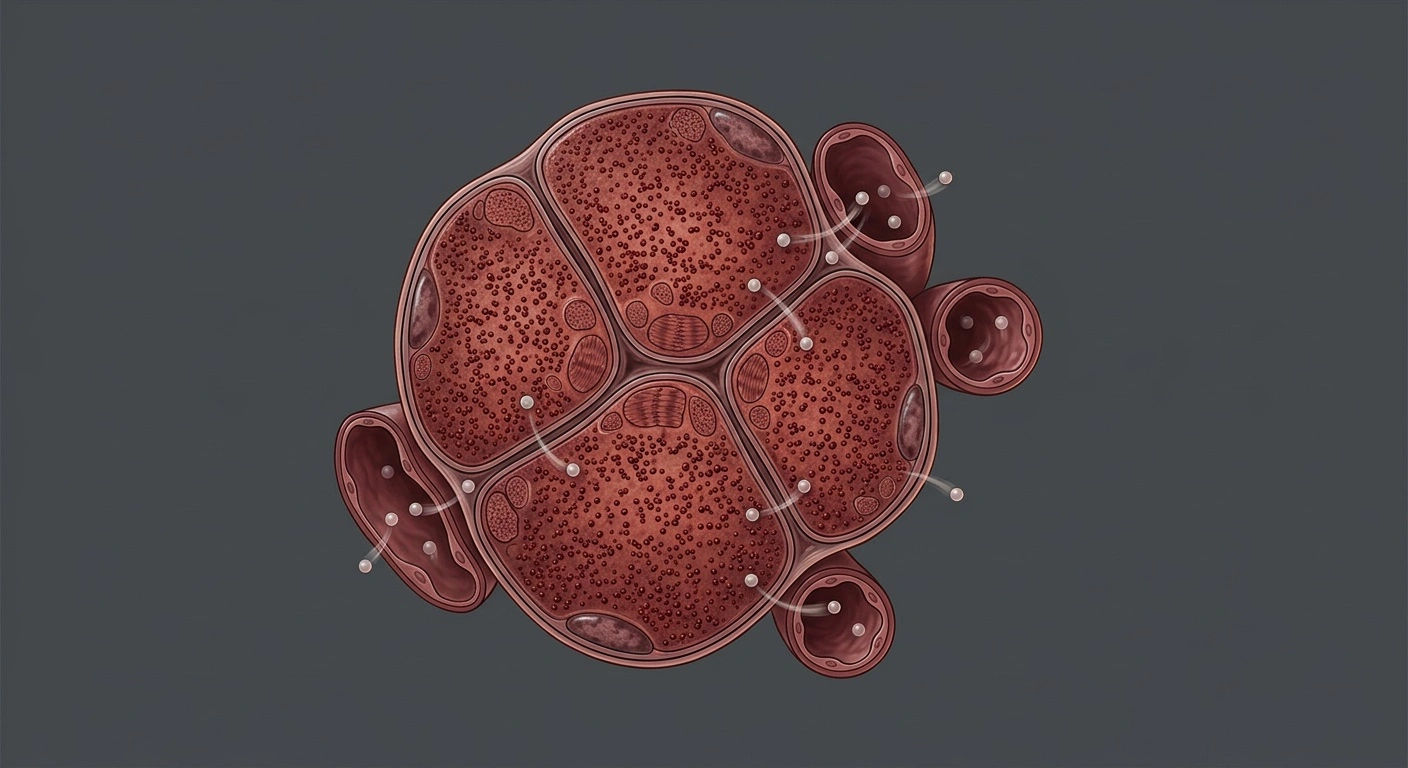
In skeletal muscle, insulin promotes glucose uptake partly by moving GLUT4 transporters toward the cell membrane. It also activates signaling pathways involving Akt, supports glycogen synthesis, and reduces muscle protein breakdown. Still, insulin provides only one signal among many.
Muscle contractions can increase glucose uptake without a large rise in insulin. After training, muscle becomes more receptive to glucose and begins restoring glycogen. A mixed meal containing carbohydrate and protein supports this process for most lifters.
Insulin and muscle growth: anabolic does not mean automatic growth
Scientists describe insulin as anabolic because it supports storage and limits tissue breakdown. People often stretch that description into a false claim: more insulin always means more muscle. Human metabolic studies do not support that conclusion.
Research shows that insulin can reduce muscle protein breakdown when amino acids are available and blood flow remains adequate. However, progressively larger insulin elevations do not keep increasing muscle protein synthesis without limit. Insulin needs other nutrients and training signals to support growth.
Essential amino acids provide raw material and a strong signal for muscle protein synthesis. Resistance training makes muscle more responsive to those amino acids for many hours. Insulin supports the process by limiting breakdown and helping the body manage fuel.
Once insulin rises enough to perform that role, pushing it higher appears to add little under normal eating conditions. Protein-rich meals can create an adequate insulin response without large amounts of carbohydrate. As a result, several carbohydrate intake patterns can support muscle gain.
What the research shows
Research on insulin and muscle growth consistently supports insulin’s role in glucose disposal, glycogen storage, and reduced protein breakdown. Resistance exercise and essential amino acids provide stronger direct signals for muscle protein synthesis. Insulin alone cannot supply amino acids or mechanical tension.
Short laboratory studies can measure protein turnover with precision. However, they cannot prove that a slightly larger post-meal insulin response creates more visible hypertrophy over several months. Progressive training, protein intake, energy availability, and recovery predict long-term results more reliably.
Carbohydrate supports training performance
Carbohydrate helps maintain muscle glycogen and may support harder training. It becomes especially useful during high-volume sessions, repeated sets, short rest periods, or frequent training. Many lifters can start with roughly 2 to 5 grams of carbohydrate per kilogram of bodyweight each day.
The lower end may suit lower-volume training or a preference for more dietary fat. The upper end often fits frequent, high-volume bodybuilding work. Adjust the amount according to performance, digestion, bodyweight goals, and personal preference.
Carbohydrate raises insulin more than dietary fat, but fuel remains its main bodybuilding benefit. Better fueling may help you complete more productive repetitions and maintain performance across the week. That stronger training stimulus can indirectly support hypertrophy.
The body stores carbohydrate as glycogen along with water. Increasing carbohydrate can therefore make muscles look fuller and raise bodyweight quickly. That change does not represent newly built muscle tissue.
Likewise, reducing carbohydrate can produce a flatter appearance without causing immediate contractile muscle loss. Glycogen and water levels explain much of the short-term change. Track performance and longer-term measurements instead of reacting to daily fluctuations.
Fast-digesting carbohydrate helps most when you must recover quickly for another demanding session. It may also suit people who struggle to eat enough or tolerate high-fiber foods before training. Otherwise, total daily carbohydrate usually matters more than the source or exact timing.
Oats, rice, fruit, bread, potatoes, and sports drinks can all provide useful carbohydrate. Choose foods according to digestion, convenience, cost, preference, and overall nutrition. A sports drink offers little advantage when ordinary meals meet your needs.
Protein supplies the material insulin cannot
Aim for roughly 1.6 to 2.2 grams of protein per kilogram of bodyweight each day when muscle growth is the goal. The lower end usually works when energy intake and protein quality are adequate. The upper end may help during an energy deficit or with less concentrated plant protein sources.
Spread protein across about three to five meals rather than eating nearly all of it at once. A useful target per meal is approximately 0.3 to 0.4 grams per kilogram. Smaller or larger meals can still contribute to an effective daily total.
Each meal should provide a meaningful amount of essential amino acids. Useful sources include dairy, eggs, meat, fish, soy, legumes, and complementary plant proteins. Food preferences and tolerance should guide the final mix.
Protein also stimulates insulin release. For example, whey can produce a noticeable insulin response despite containing little carbohydrate. This normal response does not make whey harmful or cause fat gain independently of energy balance.
You do not need to combine protein with sugar to activate muscle protein synthesis. Carbohydrate can support glycogen recovery and training fuel, but protein provides the main nutritional signal. Eat a protein-rich meal within a few hours before or after lifting.
The post-workout window is broad, not a matter of minutes. If you ate protein shortly before training, you can eat your next meal at a practical time afterward. Daily intake and consistent meal patterns matter more than rushing to drink a shake.
Common mistake: ranking foods by glycemic index
The glycemic index does not rank foods by their muscle-building value. It measures the blood glucose response to a fixed amount of available carbohydrate under standardized conditions. Mixed meals behave differently because protein, fat, fiber, preparation, and portion size alter the response.
A rapidly digested food is not automatically better after training. Likewise, a slowly digested food is not always healthier in every situation. Digestion, performance, nutritional value, and personal tolerance provide better selection criteria.
Two diets may produce different insulin curves while supporting similar muscle growth. This often occurs when both provide comparable energy, protein, micronutrients, and training fuel. Chasing the highest or lowest possible insulin response adds little practical value.
Insulin sensitivity matters more than insulin spikes
Insulin sensitivity describes how effectively tissues respond to a given amount of insulin. Good sensitivity lets the body manage glucose with less insulin. With insulin resistance, the pancreas may release more insulin to control blood glucose.
Resistance training generally improves glucose handling. Working muscles use glycogen and increase their ability to take up glucose. Muscle contractions also move GLUT4 transporters through pathways that partly bypass insulin.
Over time, building and regularly using muscle creates a larger active compartment for glucose disposal. This benefit supports metabolic health as well as training performance. However, exercise does not replace medical treatment for diabetes or other glucose disorders.
Aerobic activity also improves cardiovascular fitness and glucose management. Two or three moderate cardio sessions each week can complement resistance training. Regular walking and brief movement after meals are useful options too.
Match conditioning to your fitness, schedule, and lifting workload. Excessive cardio can interfere with recovery when food or rest falls short. Moderate amounts generally do not prevent muscle gain.
Sleep also affects glucose control and recovery. Aim for seven to nine hours each night and keep a consistent schedule when possible. Repeated sleep restriction can impair appetite regulation, training quality, and insulin sensitivity.
| Variable | Practical target | Why it matters |
|---|---|---|
| Resistance training | Train each muscle about twice weekly and complete roughly 10 to 20 challenging sets as tolerated | Provides mechanical tension and improves glucose use in trained muscle |
| Protein | 1.6 to 2.2 g/kg/day across three to five meals | Supplies essential amino acids for muscle protein synthesis |
| Carbohydrate | Often 2 to 5 g/kg/day, adjusted for workload and preference | Supports glycogen, performance, and recovery |
| Sleep | 7 to 9 hours each night | Supports recovery, appetite regulation, and insulin sensitivity |
| General movement | Regular walking plus two or three manageable conditioning sessions each week | Improves cardiovascular fitness and glucose handling |
How to structure meals around training
Before a typical lifting session, eat a mixed meal containing protein and carbohydrate. A window of one to four hours works well for many people. Make the meal smaller and easier to digest as training gets closer.
Keep fat and very high fiber intake moderate if they cause discomfort during lifting. A large meal may work four hours before training but feel heavy after only one hour. Test portions and timing during ordinary sessions.
After training, eat another protein-rich meal within a few hours. Include carbohydrate according to your daily needs and upcoming workload. Faster glycogen replacement matters more if you plan to train again later that day.
If your next session is tomorrow or later, normal meals usually provide enough time to restore glycogen. You do not need the largest possible insulin response. Your meals need to digest well, support performance, and fit your total intake.
Practical options include oats with milk and fruit or rice with eggs and vegetables. Yogurt with cereal also works, as does a sandwich with fruit. No single meal has a special hormonal advantage.
Total energy intake sets the broader environment for growth. A modest surplus may help when bodyweight, gym performance, and measurements remain static for several weeks. Rapid weight gain, however, increases the likelihood of gaining unnecessary body fat.
Adjust food gradually and follow sustained trends. A single weigh-in can reflect water, glycogen, food volume, and sodium intake. Weekly averages provide more useful information.
What to track instead of insulin spikes
Track repetitions, load, technique, recovery, and performance across several weeks. These measures show whether your training plan produces useful progress. If they improve while protein and sleep remain consistent, you do not need a more complicated insulin strategy.
If progress stalls, review your program first. Check whether you add repetitions or load, perform enough hard sets, and recover between sessions. Then assess protein and total energy intake.
Fine-tune carbohydrate timing only after those basics are stable. The goal should be better performance, recovery, and digestion. A larger hormonal response is not a useful outcome by itself.
Insulin resistance, diabetes, and strength training
People with insulin resistance can still gain muscle. Resistance training also plays a valuable role in metabolic health. However, diabetes and prediabetes change the safety requirements around exercise and nutrition.
Training, meals, insulin, and other medications can interact to alter blood glucose. Individual responses vary by condition, medication, exercise type, and session length. A generic bodybuilding plan cannot account for those factors safely.
If you use insulin or another glucose-lowering medication, do not change its dose or timing based on bodybuilding advice. Consult your prescribing clinician or a registered dietitian who understands exercise and diabetes. Blood glucose may fall during training, soon afterward, or later in recovery.
Seek medical evaluation for excessive thirst, frequent urination, blurred vision, unexplained fatigue, or unusual weight changes. Many conditions can cause these symptoms, so a training article cannot diagnose them. Regular screening matters if diabetes runs in your family or previous tests showed elevated glucose.
Nutrition must also fit your medical treatment plan. No single carbohydrate target works for everyone with diabetes. Complete carbohydrate elimination is not automatically necessary or appropriate.
The practical goal is reliable glucose management alongside adequate nutrition and sustainable training. Monitoring needs also differ among individuals. Follow the plan developed with your healthcare team.
Why using insulin as a bodybuilding drug is dangerous
Prescription insulin saves lives when people use it for a medical need. Using it without medical supervision is not a safe muscle-building shortcut. Excess insulin can drive blood glucose to dangerously low levels.
Severe hypoglycemia can cause confusion, seizures, loss of consciousness, coma, or death. Training, food intake, alcohol, illness, and other medications can change insulin requirements. These factors make nonmedical use unpredictable.
This article does not provide instructions for insulin dosing, timing, stacking, sourcing, or administration. Bodybuilding education should explain normal physiology while respecting insulin’s medical purpose. If your clinician prescribed insulin, follow that treatment plan and discuss resistance training with your healthcare team.
No legal supplement duplicates the medical action of prescription insulin. Products sold as glucose disposal agents have weaker and less consistent evidence than training, nutrition, movement, and sleep. Some ingredients may also interact with glucose-lowering medication.
Build muscle by training, eating, and recovering
The practical relationship between insulin and muscle growth is straightforward. Insulin supports nutrient handling and reduces muscle protein breakdown. It cannot replace progressive resistance training or the amino acids needed to build tissue.
Train with progressive overload and use a weekly volume you can recover from. Roughly 10 to 20 challenging sets per muscle each week can serve as a broad starting range. Keep many working sets within one to three repetitions of failure.
Eat enough protein, use carbohydrate to support your workload, and sleep seven to nine hours. If growth stalls, confirm that your program and recovery remain consistent before adding food. Then increase energy intake modestly and monitor the trend.
Falling performance, persistent soreness, and declining motivation may signal excess fatigue. In that case, more carbohydrate may not solve the problem. A deload or temporary reduction in training volume may restore performance.
The long-term plan remains simple. Ask your muscles to do progressively more work, provide enough material for recovery, and protect your metabolic health. Once those pieces are in place, the exact height of each post-meal insulin curve matters very little.