lifting while traveling gets easier when you plan around your schedule, equipment, and recovery. You do not need a full gym or a perfect routine to maintain strength on the road.
The goal is simple: train the major movement patterns with enough effort to preserve muscle and skill. A few focused sessions can support weeks of travel without taking over your trip.
How to Make Lifting While Traveling Work
Start by deciding how much time you can realistically train. A 30-minute workout completed twice a week beats an ambitious plan you cannot follow.
Next, check your hotel, rental, or nearby gyms before you leave. Look at equipment photos and recent reviews rather than trusting a vague “fitness center” listing.
If the available equipment looks limited, adjust your program in advance. Build sessions around dumbbells, cables, bodyweight exercises, or resistance bands.
Set a Realistic Training Goal
Travel usually changes your sleep, meals, and daily schedule. Treat maintenance as a successful outcome, especially during busy work trips or active vacations.
You can maintain strength with less volume than you use to build it. Keep the effort high, reduce the number of sets, and avoid unnecessary fatigue.
For example, perform two hard working sets instead of four or five. Stop each set with one to three good repetitions left in reserve.
Choose the Right Place to Train
Hotel Fitness Rooms
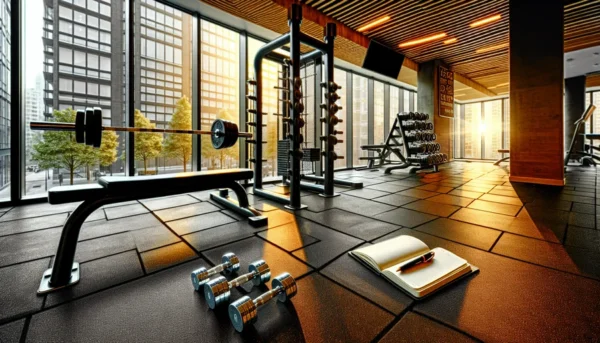
Hotel gyms work well for short, efficient sessions. Most provide dumbbells, an adjustable bench, treadmills, and sometimes a cable station.
However, equipment quality varies widely. Call the front desk if photos do not show dumbbell weights or available machines.
Day-Pass Gyms
A day pass gives you access to heavier weights and more exercise choices. Search gym websites, booking platforms, and local social pages for current policies.
Ask about staffed hours before visiting. Some facilities only allow guests to enter when an employee can process the pass.
Resistance Bands and Bodyweight Training
Pack long resistance bands when gym access looks uncertain. They take little space and support rows, presses, curls, triceps extensions, and assisted pull-ups.
Bodyweight work also helps, but choose exercises that remain challenging. Split squats, push-up variations, single-leg hip thrusts, and slow-tempo squats work well.
Use Full-Body Travel Workouts
Full-body sessions provide the most coverage when you have limited training days. Each workout should include a squat, hinge, push, and pull.
Add direct arm or core work if time allows. Keep the session moving, but rest long enough to maintain sound technique.
Hotel Gym Workout
- Goblet squat: 3 sets of 8 to 12 repetitions
- Dumbbell Romanian deadlift: 3 sets of 8 to 12 repetitions
- Dumbbell bench press: 3 sets of 6 to 12 repetitions
- One-arm dumbbell row: 3 sets of 8 to 15 repetitions per side
- Dumbbell lateral raise: 2 sets of 12 to 20 repetitions
- Plank: 2 sets of 30 to 60 seconds
Use controlled repetitions and select loads that make the final few reps difficult. If the dumbbells feel light, slow the lowering phase or add a pause.
Minimal-Equipment Workout
- Rear-foot-elevated split squat: 3 sets of 8 to 15 repetitions per leg
- Single-leg hip thrust: 3 sets of 10 to 20 repetitions per leg
- Push-up variation: 3 sets near technical failure
- Resistance-band row: 3 sets of 12 to 20 repetitions
- Resistance-band overhead press: 2 sets of 10 to 20 repetitions
- Side plank: 2 sets of 20 to 45 seconds per side
Increase difficulty before adding endless repetitions. Use a slower tempo, longer range of motion, harder variation, or thicker band.
Adjust Your Usual Program
Do not try to copy your home routine exercise for exercise. Match movement patterns and training effort instead.
Replace a barbell back squat with goblet squats or split squats. Swap barbell bench presses for dumbbell presses, push-ups, or cable presses.
For deadlifts, use dumbbell Romanian deadlifts or single-leg hinges. Rows, pulldowns, band pulls, and pull-ups can replace most back exercises.
Keep Workouts Short and Focused
Supersets can save time without reducing training quality. Pair exercises that use different muscle groups, such as squats with rows.
Avoid pairing two demanding compound lifts if your conditioning limits performance. Instead, combine a large movement with an easier accessory exercise.
Set a firm finish time before you start. This keeps rest periods under control and prevents a short session from consuming your morning.
Manage Recovery on the Road
Hard training competes with long flights, poor sleep, unfamiliar beds, and extra walking. Reduce your load or volume when fatigue affects your coordination.
Hydration also matters, especially after air travel or in hot climates. Drink regularly and include salt with meals if you sweat more than usual.
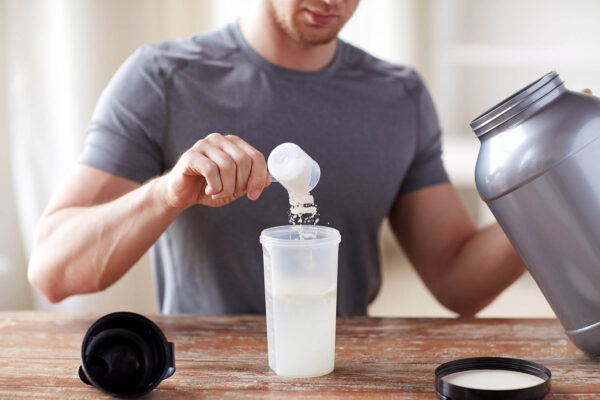
Aim for a useful protein source at each meal. Eggs, yogurt, fish, meat, tofu, beans, and protein powder all provide practical options.
Avoid Common Travel Training Mistakes
Do not turn every workout into a test of strength. Unfamiliar equipment and disrupted recovery make maximal attempts a poor trade.
Also, avoid excessive soreness early in the trip. High-repetition lunges may look harmless, but they can make stairs and long walking days miserable.
Finally, do not abandon the session because equipment differs from your plan. Choose a reasonable substitute and start training.
Stay Consistent Without Planning Your Trip Around the Gym
Lifting while traveling should support your routine rather than control your itinerary. Two efficient full-body sessions can maintain progress during most short trips.
Plan ahead, train hard enough, and accept sensible substitutions. Then return to your normal program gradually once your sleep and schedule settle.